
Interview with Peter Ferentzy, PhD
SBO.net interview with Peter Ferentzy, Ph. D, about gambling addiction, changes and trends within the gambling world.
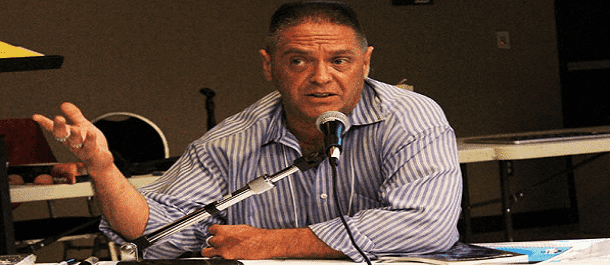
PETER FERENTZYS BACKGROUND
SBO.net: We are here today with Peter Ferentzy, Ph.D, author of “Dealing with Addiction – Why the Twentieth Century was Wrong”, “Dealing with an Addict – What you need to know if someone you care for has a drug and alcohol problem” and co-author of “A History of Problem Gambling – Temperance, Substance Abuse, Medicine and Metaphors”. He has also written numerous articles for the Huffington Post and Psychology Today, amongst other publications.
Peter, great to speak to you today. If you wouldn’t mind by starting off with a bit about yourself and your background…
Peter Ferentzy: Alright, well, my background. My PhD was in social and political thought. I was interested in the French social historian Michel Foucault who had done histories of madness, histories of sexuality. I wanted to do history of addiction, so I did. That’s how I got into addiction studies, and I was, I had that expertise in the addictions, and then when I finished my PhD I was having trouble finding work. For a while I was a phone psychic. Then I was a bouncer, but there were opportunities in problem gambling so I finally found work in my field, and I started studying pathological gambling and I’ve done a lot of writing on that. I’ve struggled with addictions of my own, and if you go to my website you might be surprised at what you find. One person who reviewed my first book wrote, “Peter Ferentzy is the only PhD crackhead that Google knows, so he’s not hard to find,” so I am a popular author and I’m active on the public talk circuit. I’m politically committed to making changes.
MARKETING OF GAMBLING
SBO.net: Gambling companies at the moment seem to be trying to soften the image of gambling to being a relaxing and fun form of entertainment. They’re trying to use humour in their advertising to try and reduce the way gambling is perceived in terms of being a problem. What would your view be on this?
Peter Ferentzy: Yeah, well, okay, I think that when you look at the way in which gambling is marketed, they’re going to play upon one psychological issue that is specific to gambling. This is what we often in the field call the ‘gambler’s fallacy’. They’re cognitive distortions associated with all addictions. People often lie to themselves. Denial is a function of the human condition, but with gambling there’s a special kind of self-deception. A gambler often thinks that if he threw three heads in a row, the next one is likely to be tails, and that isn’t so. It’s always 50-50, so there’s a big, big cognitive issue with gambling. Some pathological gamblers will wear diapers when they go to a casino, because they believe that when they stay at a certain machine or in a table they are due for a win, and that isn’t so. It’s totally random, but the industry will play upon that.
SBO.net: Pathological gamblers go so far as to wear diapers when they’re gambling?
Peter Ferentzy: Yes, they have the belief that if they lose for a half hour straight on a machine, then the machine is due for a payout. This isn’t so. It’s always perfectly random, but that cognitive distortion is big in gambling.
Calculation of odds is specific to gambling, and perhaps another way to look at it is if you look at recovery from gambling, patience is a big message. Patience is perhaps more important to a gambler in recovery than it is to a substance addict. I’ll tell you why. Each addict must resist the instant gratification associated with their game of choice, their drug of choice, okay? So you need to put off that instant gratification, yes, you need to be a little more patient, but a gambler is confronted by another kind of instant gratification, the real prospect of solving his or her problems overnight. You could go to the casino, and you could win $100,000. It’s possible. Nobody thinks that he is going to pay off his mortgage or put her kids through college because they get drunk or because they smoke a bunch of crack, but gamblers can really think that they might solve their problems, so when I was studying Gamblers Anonymous, I learned that one of their most important messages was ‘don’t try to solve all your problems at once’.
GAMBLERS AND SUBSTANCE ABUSERS
SBO.net: And would that apply to only gambling, or does it also apply to other vices?
Peter Ferentzy: Well, that’s, well, like I say, one gambler put it to me like this, “I have to be doubly on guard” – he was also an alcoholic – “against the temptation to gamble, because I have no memories of winning while drinking.” You don’t pick up a bottle of vodka and think, “Drinking this bottle is going to help me pay my mortgage,” but you do hit the casino or you do play some online poker thinking that ‘maybe this activity will help me to pay off my mortgage’.
SBO.net: Okay, so how do they try to deal with gambling addictions differently to, say, the substance abuse, which would be the easiest one to compare it to?
Peter Ferentzy: Well, often the messages are very similar. Gambling, pathological gambling, is a newer field, and gambling addiction and substance abuse are, think of them as kindred afflictions. They have many similar areas, so they learn a lot. The gambling people have learned a great deal from substance abuse people, but the emphasis on cognition is more accentuated in gambling, the lies that gamblers tell themselves. Drunkards might tell themselves, “Hey, I can control it.” There’s a bit of denial there when you can’t. A gambler might say to himself, “I can control it,” a bit of denial, yes. But there’s another level of cognitive distortion in gambling that’s associated with odds, like I told you already.
So, the emphasis on cognitive restructuring will be stronger when you’re dealing with a gambler than you are when you’re dealing with a drinker or an IV drug user.
SBO.net: Do you think it’s a lot harder to convince a gambler that they have a problem compared to somebody who has a substance abuse problem, because obviously the substance can be seen as the problem whereas a gambler has it in their head, the gambler’s fallacy as you mentioned, that they’re going to win?
Peter Ferentzy: Yeah. I don’t know if it’s harder to convince them that they have a problem. It might be, I’m not sure. It’s often hard to convince anybody that he or she has a problem. Think of denial as endemic to the human condition, not this magic thing that only haunts addicts. If you have a young infant and that child is showing signs of some kind of a disability, you might want to tell yourself it isn’t so. You might not want to admit it to yourself, so denial is a function of the human condition, and substance addicts are no different, so because they have a problem part of them wants to lie and say, “No, I don’t really have a problem.” Yeah, I don’t know if it’s stronger with the gambling, but I’ll tell you the message of abstinence is going to be a lot stronger in recovery from gambling than it will be when it comes to substances, and do you know why?
SBO.net: No.
Peter Ferentzy: Okay, I’ll tell you why then. (Laughs) It’s my job to tell people why. Okay, alright, let’s say you have a drinking problem or you have a cocaine problem. You’ve been cleaned out for a year, you go out, you get drunk, you do a bunch of cocaine, one or the other or both. You spent some money, maybe you’ve spent €500, maybe 1000, but after that you can pick up the pieces and if you didn’t wrap your car around a tree, and probably you didn’t, then you can get on with your life. A gambler can play his home away overnight. You see, nobody can smoke that much crack. Nobody can drink that much beer. A gambler can play his house away overnight.
GAMBLING BEING LEGALIZED MAKES IT MORE FAMILY FRIENDLY
SBO.net: Now gambling is being advertised as family-friendly and not as evil as it was perceived as, do you think that’s going to make it harder to deal with gamblers?
Peter Ferentzy: Well, what has been happening is more mainstream elements are developing gambling problems. When most gambling took place at the racetrack and it was in the hands of bookies and underground elements, a very high percentage of problem gamblers were men and people more on the fringe, the kind of person who doesn’t mind rubbing elbows with wise guys. But with the proliferation of legal gambling venues, more regular middle class people are involved and more women.
The women haven’t caught up yet but they’re catching up. There was a time when it was safe to say that two out of three, maybe three out of four problem gamblers were men. That probably isn’t true anymore. Women are approaching the 50-50 mark. They’re catching up to us, because we have created venues that are more female friendly.
GAMBLING AND SUBSTANCE ABUSE
Peter Ferentzy: Sometimes gambling is also very hidden. Sometimes people are more, people have a drug problem, and this is something that we, when we did a study of gambling and the crack users of downtown Toronto, some others aside Flora Matheson did this. Many people were simply unaware of the problem gambling that occurs among these people, but it does occur. But many people, even front line people, would say, “No, there’s not much gambling going on, nothing to mention.” I would have to emphasise that it’s not, it’s not in absolute dollars and cents, but it’s in relation to how much you can afford.
If somebody regularly takes a pass on cigarettes, bus fare or just a sandwich in order to buy scratch tickets for some kind of instant win, then we can call that a gambling problem, whereas a pro athlete could spend $10,000 in a night and we might not call it a problem, but the gambling among many of these crack users is compulsive, and often they’re gambling because they’re hoping to get up $40, $50 together just so they can buy a little bit of dope to get through the next hour. But it seems to be hidden. It’s overshadowed by the substance use, and we found that we were uncovering gambling problems all over the place, and I’m not a professional denial sniffer. I’m not looking for trouble where there isn’t any, but there was really a lack of awareness.
SBO.net: Was there a lack of awareness amongst the drug users themselves?
Peter Ferentzy: We would ask them questions, questions that don’t lead, but just questions that would make them think, and by the end of the interview many of our participants were saying, “I never really thought about how much I gambled.” One woman said, “It’s just occurring to me now that almost every time I smoke crack, the dope is being scooped up with a scratch ticket or something, because there’s always lottery paraphernalia all over the crack places.” She had never thought about that before, but she reflected upon it during the interview.
SBO.net: So are they closely linked in the way they affect the mind?
Peter Ferentzy: Yes.
SBO.net: Is it that gambling is closely linked with substance abuse, or is it that substance abuse is closely linked with gambling?
Peter Ferentzy: Well, both, both. Look at it this way, a drug can only act upon systems that are already present in your brain. It cannot create a system. It’s not like that, so opiates, cocaine and stimulants like cocaine will act upon your neurons, it will act upon your synapses and you will get certain highs. There’s a hijack brain theory of drug addiction. The idea is that when drugs enter your system they hijack natural, well, the systems associated with natural pleasures, sex, food, fun, things like that. The drugs will hijack these systems and play upon them. Gambling can have a very similar effect to drugs. Some gamblers who quit cold turkey have been known to experience the shakes, diarrhoea, sometimes you would look at them and you would not be able to tell which one is the junkie kicking the heroin and which one is the gambler kicking the gambling, because the symptoms are very similar sometimes.
SBO.net: Is that the gambling has the same effect on hormones in the body or different functions in the body?
Peter Ferentzy: Yes, all of that. You get to a point where there is only one thing that takes you to a place where you feel blurred. Maybe that’s your beer, maybe that’s your vodka, maybe that’s your shopping, maybe it’s your gambling, but for whatever reason, with you that one poison is the one way you have a feeling good, a feeling whole, and you’ve been dependent on it for years. If somebody takes that away your system will collapse. You might sweat, you might shake, you might vomit, you might experience diarrhoea, and there are times when withdrawal from a purely behavioural addiction has the same kind of symptoms that you see as marked in withdrawal from a chemical addiction.
SBO.net: So, is gambling then, would you consider gambling addiction to be genetic or would it be a learned behaviour or how would somebody become a gambler as opposed to-?
Peter Ferentzy: Okay, okay, the answer to questions like that is that genetic determinants play a role, but genetics can never explain everything. Nobody is genetically hardwired, doomed to becoming an alcoholic or a compulsive gambler, but some are at higher risk than others and Alexander Blaszczynski has done work on this. Now, there’s, he has offered a pathways model of gambling, of problem gambling, so that there are different types. With some pathological gamblers the genetic or the biological determinants are more significant. For others it’s more of a learned behaviour. In every case it’s going to be a mix of all of those things. Sorry I can’t give a final answer, but it’s always a mix of that.
GAMBLERS AND DRUG ABUSERS CHASE THE ORIGINAL HIGH

SBO.net: No, of course not. But in terms of, learned behaviour, I would have thought substance abuse would have been more a form of escapism in a way. You’re saying with gambling they’re actually chasing something?
Peter Ferentzy: They are chasing. They are chasing. The substance user is chasing the original high. The gambler might also be chasing the original high, but on top of that the gambler is chasing the money he lost. It’s a different kind of chasing. Gamblers chase in two ways.
Nobody, yeah, nobody smokes a bunch of crack thinking, “I’m going to get my money back that I wasted on crack because I’m smoking this crack,” but a gambler really thinks that he might get his money back, the money he wasted.
SBO.net: So how is it possible to change the thought processes and activities of an addicted or a pathological gambler, curing them, per se?
Peter Ferentzy: Well, cure is a big word. I don’t know, some people consider addictions to be lifelong. That’s probably not true, but the truth is that, all psycho behaviour disorders are chronic in the sense that if you’ve ever been there before you’re at higher risk than average for going there again. How do you cure a compulsive gambler? It’s person specific. A lot of people grow out of their addictions over time and many in the treatment industry don’t want you to hear this, but often when people go to treatment and they get better, they’re getting better because they’re ready to change; it’s their time, and the treatment itself is peripheral to the change. We’re starting to understand this more and more.
For instance, a long time ago if you had the flu, you were living in a time when we didn’t understand that the flu just runs its natural course. You have the flu, you go to your doctor, the doctor gives you this or that, he might even bleed you. Four or five days later your flu is gone and you think the doctor did it, you thank the doctor, you give him some money and you’re grateful. In a similar fashion, people grow out of many of their behavioural disorders over time. Often when people are ready to change they hit the treatment centres, and then the treatment people will get credit for cases of recovery that probably were on the cards in any case. I’m an historian of addiction among other things and I’ll tell you that if you had a habit in 1905, before we had the 12 steps, before we had the treatment in place, your chances of kicking were about the same as they are today. We’ve put a dent in it, but it’s a small dent.
SBO.net: And do you see this changing in the future or is it still the same attitudes or ideas that are prevalent within the sort of treatment community?
Peter Ferentzy: I think that treatment people understandably exaggerate their own importance, and that just simply means that they’re human. What treatment can do is tweak a process that has its own life, give it a little nudge. You can’t control the wind, but if you’re a good sailor you can use the wind and maybe steer the boat a little bit this way, but if you’re crazy enough to think that you control the current or you control the wind, you’re not going to get anywhere.
SBO.net: So they can only really assist the person in the decision they’ve already made.
Peter Ferentzy: Exactly, exactly. It’s an organic change that happens over time. It’s a natural process. People grow out of, mature out of their addictions. That’s the good news. Over time people usually get better. The bad news is they don’t get better when we want them to. Somebody might get five, six years or ten years of slipping and sliding ahead of them and you can jump up and down, you can scream, you can smack them, but there’s not much you can do, except shove them in a trunk, tie them up. Then they’ll stay clean.
SBO.net: (Laughs) Unless they get out…..
ONLINE GAMBLING: PRESENT AND FUTURE TRENDS
SBO.net: You mentioned earlier about new trends developing, that gambling has not changed very much recently, and the big change as far as you’re concerned took place in 1990s.
Peter Ferentzy: Yeah, yeah, I think the biggest change perhaps is the online access.
So you can play your life savings away, your college, your kid’s college fund away without even leaving your bedroom. You can do it all on the computer.
SBO.net: But when you look at online gambling, the losses are actually the lowest amount.
Peter Ferentzy: Yes, yes.
SBO.net: Do you see it as a future problem, online gambling, or is it a problem that’s already there or is it no more so a problem than any other form of gambling?
Peter Ferentzy: It’s no more a problem than any other form of gambling. It’s just one more thing that people can partake in, but, you know, the way that things play out online sometimes will mimic in a comical fashion things that have been going on in land-based venues. I’ll give you an example. In the old days, if you were running something that was semi-legal or illegal, say you were running a brothel, gangsters might, say, make trouble for you and then offer you protection from this trouble, and as long as you pay them they will ‘protect you’, okay? They’re shaking you down. If you’re running a semi-legal or illegal gambling operation online, somebody who’s good at computers might send a few viruses your way, interfere with your business, stopping you cold, and then offer you protection from these assaults in exchange for money, in the exact same fashion people are being shaken down online.
SBO.net: In Norway, they have it that the bank has to have a limit, or they’re not allowed to use their cards, Norwegian citizens, in a casino, and in the United States of America you also have a lot of barriers to people if they want to gamble. Do you think that’s a good idea, or is that just causing more problems in terms of feeding people’s addictions?
Peter Ferentzy: I think that some of the barriers are good. I don’t like the prohibitory mindset, but, you know, in North America, I don’t even know if this is the case in Europe, but all over North America, you can get a second or third mortgage on your home right next door to the casino.
And also when you have these gaming machines inside pubs, somebody can walk in there and be controlled and not have a problem, but after he’s had six, seven pints he might get stupid, so controlling things like that I would advocate.
SBO.net: But in terms of the online media, do you think they’re nearly losing their ability to minimize the harm by ignoring the problem?
It’s, yeah, well, it’s a new kind of technology, and it’s a new kind of challenge. I remember when I was studying, doing a study of organized crime and gambling, one problem was identifying location. If gambling is illegal, say, where you are, you’re in Ireland?
SBO.net: Yes.
Peter Ferentzy: Let’s say, that I’ve got an online casino happening here in Toronto. You play at my casino, did that bet take place in Ireland or in Canada?
See, there’s a legal issue here, and the law in many ways has to catch up with these new technologies.
SBO.net: So, what do you think would be a good solution for governments to face online gambling problems effectively?
Peter Ferentzy: I think it’s, I don’t look to a solution with a capital ‘S’. I see it as a problem that we are going to struggle with and manage to the best of our abilities. Sometimes we’ll fail miserably, sometimes we will succeed wonderfully, most of the time it will be somewhere in-between those extremes. I don’t see a bidding solution, I don’t see a huge catastrophe around the corner. Gambling has been around a lot longer than the internet. People were losing their shirts, so that isn’t new.
SBO.net: Would it be better if they have, I mean, is there any sort of harm reduction in place that you would approve of and think that there should be more money or more resources put into?
Peter Ferentzy: Well, yes. Many gamblers aren’t ready to quit, but that doesn’t mean you can’t help them curtail their gambling. Some people do put limits on themselves with varying degrees of success. One good one is to go to, is to make sure that when you go to a casino you have a certain amount of money on you but you leave all your plastic at home. Of course, that doesn’t stop you from hopping into your car, going home, getting your plastic and then coming back, but things like that do, over time, amount to less damage.
SBO.net: Yeah, that’s positive. Remember the feeling of how you felt when you went and you came back and then proceeded to lose all your money again if you did.
Peter Ferentzy: There is that. One of the funny things about gambling is that so many of the problem gamblers I interviewed identified a big win as their downfall. They gambled just like any other normal person, here and there, now and then, but one day they got lucky or they thought they were lucky. They won a huge amount of money in very little time and after that the bug bit them, and that’s when their life started to fall apart.
SBO.net: And why would you think that is?
Peter Ferentzy: Well, I think that somebody is affected by, if you were to win €40,000 overnight, it might affect you. You did it once, now there’s a part of you that’s dying to do it again. The elation associated with a huge win can be devastating.
Then a process can kick in. What happens often to gamblers is that they lose a lot of money. Now they’re in debt. The only way they see themselves as getting out of debt is by gambling more. Then they’re in even deeper. Then they get even more desperate, so it’s a process that can feed on itself, like the snowball rolling down a hill.
SBO.net: Would you say a big win could have an effect on the actual psychological process of the person who’s experienced that big win?
Peter Ferentzy: Yeah. The big win will have a psychological effect. The actual brain functions, if you pursue something compulsively for a long time, your brain will rewire itself, and here’s one good way to help understand addiction: the brain is much better at learning things than it is at unlearning. You learn your way into a maladaptive behaviour, but that doesn’t mean that you can learn your way out as easily. Try, for example, to unlearn the English language. You couldn’t do it. Our brains were designed to learn things, not to unlearn, and if you have learned your way into a bad habit, unlearning is a huge challenge.
SBO.net: So how would you start about trying to, would you replace it or-?
Peter Ferentzy: Well, replacement, replacing it with something else is often good. Spirituality is a big one. A lot of people find God. You know, ‘I used to be all messed up on dope, now I’m all messed up on the Lord’ is quite common. Finding some, finding another activity that gives you a high, that if, even if that high doesn’t equal your drug high or your gambling high, at least it can match it. A lot of people get clean in response to commitments. Tons of people give up their addictions when they have children, something that you value even more than that high, incentives such as that.
NEGATIVE AND POSITIVE REINFORCEMENT
SBO.net: Then is pathological gambling effectively somebody just learning bad habits the same way as if somebody is very sensitive, say, and they were bullied when they were younger, they might tend to lash out at people as their defence?
Peter Ferentzy: Yes, it’s similar, yes. It’s similar, yes. Actually it’s good to look at positive and negative reinforcement. There are so many ways to explain addiction I don’t even know where to start, but here’s two points. Negative reinforcement appoints on the assumption that something is missing in you. If you are prone to an addictive behaviour, alcoholism, pathological gambling, something like that, you are deficient, you are wounded somehow. You are more stressed out than you should be, maybe for genetic, maybe for psychological reasons, but something is missing, and you compensate by taking the drug or by gambling, and then for the first time in a long time, perhaps the first time in your life, you feel at peace, as though all of that pain that you’ve been carrying has been taken away, so you keep it up. That’s negative reinforcement. The idea is that addictions are a response to something negative, something missing inside you.
Positive reinforcement models are a little bit different. It’s the idea that take a perfectly natural function, sexual desire, the desire to eat – excuse me – a perfectly natural function is pushed farther and then it goes awry and then it carries you with it. That’s another way of understanding addictions, and if you’re asking me which one’s better, I’d say they’re both better, and I’d say that in most cases a combination of these two will interact in any one person, although in some people there are definitely, the negative reinforcement can be identified, for instance, if your substance abuse was a response to childhood abuse, that helps us. We can see why.
DIFFERENCES BETWEEN MALE AND FEMALE GAMBLERS
SBO.net: I probably just misunderstood this there, but would all pathological gamblers, would that be positive reinforcement, because they’re looking for the win?
Peter Ferentzy: Perhaps, perhaps, but it could be negative reinforcement in the sense that you feel a deficiency, you feel a lack, you’re in pain when you’re not gambling. You’re gambling to kill the pain, or you’re stressed. You’ve got this horrible feeling, and gambling helps you get out of it. It can be a very defensive posture, even if the person looks like he’s being aggressive, although there is a huge gender divide among the gamblers that I’ve interviewed. Women are far more likely to identify escape. Interviewed them, “Why did you start to gamble, why did you gamble?” “To get away from my husband, to get away from the kids.” Escape kind of answers came more frequently from the women. Men were more like to say, “Because I wanted to feel like I took a shot,” so there was a distinction between the escape gambler and the actual gambler.
SBO.net: Women could be perceived as being more, about community and networking and they work better in other environments, and men, tend to be more withdrawn?
Peter Ferentzy: Perhaps, perhaps. But it’s funny because women are more likely to play slots, which is a very solo activity. Men are more likely to shoot craps, which involves competing with others, so I’m not sure. It would really depend. Now, we’re getting into very person-specific designations and details here. I don’t want to generalize.
SBO.net: Why do you think more women are gambling now?
Peter Ferentzy: That’s a nice simple reason: the proliferation of legal gambling venues. Women were far less comfortable going to a card game controlled by gangsters. Even the race track was a little bit shady, kind of rough and tumble. Casinos are nice and civilized.
SBO.net: You reckoned earlier it’s nearly 50-50 female to male gambling.
Peter Ferentzy: Getting there, yes.
SBO.net: Getting there. Do you think then it could be, well, I suppose there’s no way to know, but do you think that the casinos are concentrating on women at the moment, or is it just their concentrating-.
Peter Ferentzy: No, no, the casinos are concentrating on more middle class people, anybody who was from a so-called more respectable segment, you know, the kind of person who wouldn’t want to go a card game run by gangsters, the kind of person who isn’t comfortable. You know, the casinos are marketing to John Q. Public, people with respectable jobs, schoolteachers, everybody like that.
And here’s something that might interest you: in substance abuse there’s long been a phenomena known as telescoping.
We don’t know exactly why, although we can theorize, but it’s a fact that when it comes to, let’s say, becoming a drunkard, women typically start at later ages, but their addiction progresses more quickly. A man might start drinking hard and heavy when he’s 18 and be a full-blown alcoholic at the age of 30.
A woman might start at 25 but also become a full-blown alcoholic by the age of 30. Women start later but their addiction progresses more quickly.
That’s been well known in substance abuse for a long time and we found the same phenomena to be true for gambling. Women typically start later, but the addiction will progress more quickly. We don’t know why, but it’s true for drunkards, it’s true for cocaine users, and it’s also true for gamblers.
ALZHEIMERS AND GAMBLING
SBO.net: What is interesting, I heard an interview before with a clinical psychologist who, I don’t know if you’ve heard this, said that with people with Alzheimer’s medication has been linked to elderly people developing gambling problems.
Peter Ferentzy: I’ve heard bits and pieces of rumours about that, but I don’t know much about it.
SBO.net: Okay.
Peter Ferentzy: And remember too that association doesn’t always equal causation, so sometimes two things happen together, but that doesn’t mean that they caused it. They might appear with a high number of people at the same time for reasons that are not related.
TREATMENT OF PATHOLOGICAL GAMBLERS

SBO.net: Well, you said that since the early 1900s there has not been much of an improvement in the treatment of gambling, they think they can fix the problem when somebody doesn’t want help, if you get what I mean, whereas you’re saying that the reason they think they’re having more success is because they have the facilities there when the people want to fix themselves.
Peter Ferentzy: Yes. Also, we are, we’re more client centred than other approaches, and in my view that’s a good thing. In the old days the attitude was either abstain or get lost, be more research, mess yourself up and then come back when you’re ready, so if somebody wasn’t ready to abstain completely we’d tell them to get lost. Today we are willing to work with people who are not ready to abstain completely and do everything we can to minimize the harm along the way. The success stories are not so glorious, but we can help more people this way.
SBO.net: And reduce their impact on society and their damage to themselves obviously as well.
Peter Ferentzy: Exactly, exactly. Think of recovery as a process, very natural, very real, imperfect, packed full of shades of grey. What recovery is not is falling on your face, seeing the light and growing angel wings out of your ass and then becoming a totally different person, but for the longest time that is what the treatment system wanted, and they would accept nothing else.
SBO.net: And where do you think these changes are coming about? Is it coming more from North America and Europe, or is it a world-wide approach?
Peter Ferentzy: Both, both, and the proliferation of harm reduction approach has not even been premised on the fact that moderation works. It’s premised on what we know is that in 95 percent of cases, abstinence oriented therapies fail.
If you send 20 people to alcohol rehab or gambling rehab, you’ll be lucky to have one of those 20 abstinent after two years, so 95 percent failure rate means that something else ought to be tried.
SBO.net: So in terms of gambling then, if they’re not going to abstain from the gambling and they’re still chasing that win, how do they go about getting someone to stop gambling if obviously it’s an issue if they’re gambling money that’s affecting other aspects of their life?
Peter Ferentzy: The answers are as varied as there are gamblers out there. People will find their own reasons to change. After the fact many people give you reasons. They’ll say ‘I changed because of A, B and C’, but then you might look at that person and say, “A, B and C were just as true ten years ago so why did you change now?’ and that’s why we have to admit that we don’t know.
MEDIA AND MIDDLE CLASS PROBLEM
SBO.net: There seems to be a perception in the media in terms of substance abusers, gamblers, that they’re failures in society and they create problems – which obviously they do create problems, but do you think that the stigma attached to these addictions through the media is a negative thing or it’s that just the way it is or do you think the media could do more to help people with addictions?
Peter Ferentzy: Well the media already has changed. Problem gambling is far less stigmatized now, and more people are likely to see it as a disease or a medical condition than they were 20, 30 years’ ago, and there’s a simple reason for that: a higher percentage of middle class people started to become problem gamblers. Economic and social class has a lot to do with why some things become medicalized and some things remain not medicalized. All through the 19th century chronic drunkenness was a vice if you were poor and a disease if you were rich. That’s just how it was, and we’ve grown out of that but our class biases still figure in how we categorize people, so when a higher percentage of middle class people started to become pathological gamblers, next thing you know pathological gambling found its way into the diagnostic and statistical manual, yes, it became a disease. When more people were poor, when more poor people and people on the fringe were pathological gamblers, then it was a vice. It became a disease when nice people started to do it too.
SBO.net: So they still had the treatment before 20, 30 years ago?
Peter Ferentzy: They had treatment but it wasn’t very extensive and there wasn’t much around. You had, Gamblers Anonymous was around since the mid-20th century. You could find a GA meeting, but there wasn’t too much forward treatment for gambling. That started to happen, you know, in the wake of the proliferation of legal gambling venues. That’s how I started my career, by the way. I was just finishing my PhD and I couldn’t find work in my field, but the governments that were making so much money off gambling were all about to do something about problem gambling, so there were opportunities in pathological gambling and I found a job.
It’s hard for a budding PhD, you know, not everybody wants to hire you, but I found an opportunity and pounced on it.
GOVERNMENT PROFITING FROM GAMBLING
SBO.net: So do you believe that the improvement in services or the change in how people classify problem gambling is due to the fact that it’s become more of a middle class problem?
Peter Ferentzy: Absolutely.
SBO.net: Would this be linked to the fact that the casinos themselves have tried to change the perception, or is it just solely because it’s middle class?
Peter Ferentzy: Well, there is that too. Because these are legal venues, because governments are making a ton of money off of it, they are all about to do something about the trouble. Their public relations is bound to do something about the trouble.
SBO.net: So if they’re making money from it they have to present it without a problem.
Peter Ferentzy: Yes, yes.
All of the, the money that pays for gambling research and most of gambling treatment comes from a little bit, a small percentage that the government shaves off of casino winnings and lottery winnings. They’re making a killing off of gambling, so they-.
SBO.net: And, lotteries are obviously just the same as any other gambling.
Peter Ferentzy: Oh, yes. Oh, yes, they are just the same. Some people will spend everything they have on lottery tickets. Some people will buy hundreds of lottery tickets a week.
SBO.net: So the government makes a ton of money off gambling that pays towards gambling problems and treatments et cetera.
So how does that compare to, say, drug abuse and the way that they approach it?
Peter Ferentzy: Well, it depends on the substance. When it comes to alcohol, alcohol is taxed, so some of those taxes go toward alcohol rehab and prevention measures, campaigns against drunken driving. Cocaine, marijuana and heroin are not legal, so the government, so all of the profits from those industries go straight to gangsters. I don’t see that as an improvement. We do a better job – it’s not perfect – when things are legal, and we try to face up to the damage.
SBO.net: So considering that in North America there used to be prohibition and gambling was completely illegal, then, in one way they’re making considerable advancements to how they used to deal with it.
Peter Ferentzy: Yeah. Almost all covert forms of gambling were illegal for the longest time. You did have illegal horse racing all over North America. That was one type of gambling that, I don’t know, escaped the prohibition, but it was always illegal and gangsters controlled it.
Some people don’t know this, but organized crime makes more money off of gambling than it does off of drugs, but people don’t care as much about gambling, so drugs get more press, but gambling is big money and gambling is all about money, money, money, and it takes time to develop a tolerance for a certain amount of degradation, a certain amount of drinking, a certain amount of drug using. You develop your tolerance over time. A gambler can double his tolerance just by saying ‘double or nothing’, so it can progress very quickly, and there’s a lot of money in it.
SBO.net: Would you consider it to be more addictive than other addictions?
Peter Ferentzy: No. I wouldn’t consider it more addictive, but potentially more devastating.
Suicide rates among problem gamblers are very high.
SBO.net: Compared to substance abuse?
Peter Ferentzy: I think it’s higher among gamblers, because of the desperation they feel when they corner themselves into such high debts. They typically have very high suicide rates.
STATISTICS FOR LEGAL DRUGS/PROBLEMS
SBO.net: Well, that’s very interesting. What is the percentage of pathological gamblers?
Peter Ferentzy: Okay, that will hinge upon how narrowly or how broadly you define pathological gambling. Approximately one percent, something around one percent, of people in the west, in North America and in Western Europe, would be called problem gamblers, one percent.
But if you want to broaden your definition to a group sub-clinical but still problematic gambling, then you could push that percentage up to three percent, say.
SBO.net: And that three percent, are regular gamblers or just people that gamble?
Peter Ferentzy: Those are three percent who may not be absolutely compulsive, who may not be out of control, but they still spend a lot more money than they should and they still get themselves into a little bit of trouble, you know, spending their rent money, their grocery money, things like that, when they shouldn’t do.
SBO.net: But is the three percent based on the general population?
Peter Ferentzy: Yes, yes, yes.
You got a pretty high percentage of people who have broader, loosely defined gambling problems. If you’re looking for hard core pathological gamblers, you’re looking at maybe one percent of the population.
SBO.net: That’s a considerable amount!
Peter Ferentzy: Yes, yes, it’s pretty high.
SBO.net: And how does that compare to substance abuse? Do you know?
Peter Ferentzy: It depends on, it depends.
Tobacco addiction stands at something like 20 percent in North America, 18 percent, you know, it used to be much higher. Alcoholism, depending on how you, remember too, this is always going to hinge upon how narrowly you define the problem. If you want to give a very strict definition of alcoholism, full-blown, then maybe one percent of the population is alcoholic. If you want to broaden it to include people with minor problems and this and that, a little bit of compulsion, you can push that number up to ten percent. It hinges upon the definitions you use.
SBO.net: So we’re talking one to three, say, for gambling.
Peter Ferentzy: Yeah.
SBO.net: 20 percent for tobacco, one to ten for alcohol. They’re all the ones, then, that government gets tax off effectively. How does that compare to the drugs that they don’t tax or the substances that they don’t or vices?
Peter Ferentzy: Well, cocaine has a high addictive potential. People who use it are more likely to become addicted than people who just drink, but even with something like crack, supposedly an instantaneous high, most people who use it don’t become addicted, but the numbers for illegal drugs are harder because the populations are hard to find. You have to do ethnographic research, you have to dig through so-called hard to reach populations. You have to interview people who might not want to tell you about their drug use.
SBO.net: By having things turned illegal then, you’re doing a disservice to everyone, really, because you don’t know what’s going on.
Peter Ferentzy: That’s my opinion, yeah. I think that when you make something legal you’re simply taking the profits away from gangsters and, maybe, you know, you can put some controls on it, try to help people a little bit. Prohibition didn’t do us very much good here in North America, you know, all it did was control a system of organized crime that we’re still struggling with. It emerged during prohibition. We’re still stuck with it.
SBO.net: With prohibition there would there have been a link between gambling and alcohol? Would the two have went hand in hand?
Peter Ferentzy: Oh, there’s a lot of gambling going on in speakeasies, of course. But there were always people who were pretty specific. There were many drunks who looked down at gamblers and many gamblers who looked down at drunks. In fact, there’s a whole thing among the addict world, everybody wants to look down at the other person’s vice in order to vindicate his own, so drunks look down at needle freaks, needle freaks look down at violent drunks, and so on. Gamblers often look down at substance users, et cetera. It’s kind of funny actually.
It’s, you know, you’ve got somebody who’s drunk every day, he’s drunk all day and night, and he’ll say, “Yeah, but I don’t use drugs,” “Good for you,” right, you know? A cocaine addict’ll say, “I might be paranoid and I may swat flies, but I’m not violent and I don’t bump into things like that stupid drunk over there, see, so I’m better than somebody at least,” you know? I don’t know, it’s just something.
SBO.net: I guess everyone likes to feel better than someone!
CULTURAL DIFFERENCES OF GAMBLING
SBO.net: I read that Australia per capita has the highest amount of gambling losses, and the highest amount of bets is the United States of America and then China. Do you think that there’s a cultural reason that some nations maybe gamble more than others, or is it just that there’s more of an awareness and it’s more regulated or they have more money perhaps?
Peter Ferentzy: There are many different reasons why. Australia has had high gambling rates and high problem gambling rates, higher slightly than North America and Western Europe, I don’t know why. Chinese have a lot of gambling. They gamble a lot, and, again, I don’t know exactly why this is, but here’s a little bit of trivia, something that I noticed when I was just getting into gambling studies.
We can take three cultures in a western context, North America and in Europe, that traditionally have held alcoholism at bay: Italian, Jewish and Chinese. They have their alcoholics, but their alcoholism rates are low. These three, Italian, Jewish, Chinese, have lower alcohol rates than the Irish, than the Hungarians, than the Poles, than the English, but each of these countries seems to make up for their lack of alcoholism by producing more than its fair share of problem gamblers. I don’t know why, but it’s true.
SBO.net: Okay, so there’s definitely something to the fact then that there is a difference of cultures.
Peter Ferentzy: Culture affects everything. You know, I mean, I’m Hungarian, my parents are Hungarian, they’re Hungarian immigrants. You’re Irish.
I think that we have one thing in common: we both come from a culture where young men are often encouraged to express their masculinity by drinking a lot.
At least that’s among Hungarians and many of my Irish friends. Among Italians, a young man will not be encouraged to express his masculinity by drinking a lot, though he might be encouraged to express his masculinity by bothering women, so it’s just different, right? You grow up differently and you learn from people who are older than you.
WOMEN GAMBLING MAINLY IN THE WESTERN WORLD
SBO.net: Is it the same, to go back to the females gambling, and there’s a lot more women now gambling you’re saying, it’s approaching 50 percent. Is this a western problem or is it being seen sort of throughout the world?
Peter Ferentzy: Well, it’s definitely western. It’s going to happen from one, it’s going to vary from one region to another. I mean, you take a place like Kuwait where women aren’t allowed to do anything, they might keep their female gambling rates really low, I don’t know, but anywhere where you’re going to have more legal gambling venues, you’re likely to see a higher percentage of women partaking in that. Of course, in a country with strict Islamic law or some other kind of law which forbids women from frequenting these establishments, then you’d have a different story entirely.
You know, it’s, I hesitate to say worldwide, because culture, law, history, everything effects what people do.
SBO.net: So it’s more the facilitation and perception of being accepted by having legal venues that are advertising.
Peter Ferentzy: Yeah. Yeah, typically it’s always easier for women to participate in something that’s illegal. A place that’s illegal is more rough and tumble. Women will be less inclined to want to go there.
SBO.net: Not as safe for them.
Peter Ferentzy: Yeah.
SBO.net: Do you think then that the online gambling then could end up attracting more women than men or are there signs that women currently use online gambling?
Peter Ferentzy: Online is probably 50-50. Probably, I don’t really see much difference, I don’t see a big gender divide that way.
SBO.net: It’s probably in the early stages anyway in the terms of the online gambling.
Peter Ferentzy: Yeah.
COMMENTARY ON THE RECENT HARVARD STUDY
SBO.net: There was a Harvard study done with Bwin, and they looked at their figures, I do believe, from the last ten years. They came to the conclusion that online gambling wasn’t as much of a problem as they thought it was. It wasn’t creating pathological gambling.
Peter Ferentzy: Yeah, that’s probably likely, and I’ll tell you why: people often get spooked by novelty. People fear what they don’t know, so when online gambling was new, a lot of people thought, “Oh, no, the sky is going to fall,” and then the sky didn’t fall. Most of the threats for pathological gambling are still land-based. Online gambling has added to it but it hasn’t taken over and the doomsday stories did not come true.
SBO.net: Do you think we’re too early in the day for the doomsday stories to come true?
Peter Ferentzy: No, no, I just think that normalcy has a habit of kicking in, you know? People who want to gamble compulsively, yeah, I mean, it’s a little bit easier with the online stuff but there are other ways to gamble.
You know, people are often afraid of what they don’t know. For instance, so-called video game addiction among young people, and here’s a good example. Now, yeah, there was some video game addiction among young people when these video games started to come out, but many people of my generation were blowing it out of proportion, like ‘these kids are spending so many hours, whatever, in front of these video games’, like, well, ‘didn’t you spend just as many hours in front of a TV when you were that age?’ or ‘kids are playing video games instead of listening to the teacher.’ Oh, yeah? ‘Well, we found other ways of not listening to the teacher,’ but because the video games were new, it gave adults a scare. It was unfamiliar territory, and it was associated with their children, so in a similar fashion because online gambling is new, because it might be a threat to your children, et cetera, et cetera, people will get a little uptight, but eventually it’s normalized.
SBO.net: And do you think with normalization it will stabilize to the same level of other gambling?
Peter Ferentzy: Yeah, I mean, I don’t really see anything spectacular happening on the horizon. I think that gambling will happen online, but most gambling will happen face to face because people want the interaction, but some people who don’t want to leave their homes, you know, can lose their shirts at home if they want.
SBO.net: So, is gambling more of a communal addiction, in a way?
Peter Ferentzy: For some people, gambling offers an opportunity to socialize, so it can be, but for other people gambling is very solo, for instance, somebody who plays slots doesn’t want to talk to or even look at the person sitting beside him often, so it can be a means to escape from other people, it can be a means to socialize. Again, that question is very person-specific.
SBO.net: But is it different compared to substance abuse in that regard?
Peter Ferentzy: No, because the same thing with substance use. You can get drunk because you want to be with your friends or you can get drunk because you want to be alone with your body, and it might be the opposite for the same person on a different night, so it’s not even necessarily one person goes this way or that way. The same person can go in two directions on different days.
SBO.net: It seems like a multi-faceted problem for the pathological gambler.
Peter Ferentzy: Yes, yes. So gambling can be an opportunity to socialize, it can be a communal engagement. It can be very private and solipsistic.
LEGALIZATION OF GAMBLING
SBO.net: And the legalization that you mentioned earlier, with governments now putting money into treatments and obviously people doing PhDs etc, has that produced a lot of good quality information that wouldn’t have happened if it wasn’t made legal in terms of helping people?
Peter Ferentzy: Well, we have more information now, partially because of legalization, but also because we’re devoting more energy to studying it. Like I told you before, when more so-called respectable segments of society become involved in the activity, we are more likely to put money into solving the problem, studying the problem and so on, so we have done. We’ve been researching into problem gambling. We understand it a lot better than we did 20 years ago.
About the author

Eric Roberts
Sports Journalist
Eric has been a sports journalist for over 20 years and has travelled the world covering top sporting events for a number of publications. He also has a passion for betting and uses his in-depth knowledge of the sports world to pinpoint outstanding odds and value betting opportunities.
Related Articles

New Betting Sites
New bookmakers are a must when on the hunt for lucrative bonuses and exciting markets. Check out our updated list to find the best new online bookies available.

Best Betting Sites in the UK
Our team has researched the UK betting market and found the best there is on offer. All our recommendations have outstanding odds, bonuses and reputations.

Best Betting Sites
We have trawled the web and found the best betting sites in your country. If you’re looking to get the best odds, offers & beat the bookmakers, look no further.

Best Free Bets and Bonuses
Free bets are a great way to have fun risk free whilst trying to make a profit. Get the best free bets and use our guides to make the most of them.